
EPF vs ESIC is one of the most commonly searched topics among employees, employers, and HR professionals in India. While both schemes are designed to provide social security benefits, they serve completely different purposes. Understanding EPF vs ESIC can help employees make informed decisions and help businesses maintain compliance with labour laws.
One scheme helps employees build long-term financial security for the future, while the other focuses on providing healthcare and social protection during their working years. Because of their similar compliance requirements, many business owners assume they are interchangeable. In reality, they address completely different employee needs.
Whether you are running a startup, a private limited company, a manufacturing unit, or a service-based business, understanding how these schemes work can help you remain compliant and provide valuable benefits to your workforce. This guide breaks down EPF and ESIC in simple language so that employers can clearly understand their responsibilities and employees can better understand their benefits.
EPF vs ESIC: Understanding EPF
The Employees’ Provident Fund (EPF) is a government-backed savings scheme managed by the Employees’ Provident Fund Organisation (EPFO) EPFO India. Designed to ensure long-term financial security, its primary purpose is to help workers build a substantial nest egg for retirement savings. Both the employee and the employer make monthly contributions to this fund, which accumulates interest over time. All these transactions are tracked under a single, lifelong Universal Account Number (UAN) EPFO India. Ultimately, EPF Benefits provide an essential financial safety net, allowing individuals to maintain financial independence and stability during their post-retirement years.
EPF vs ESIC: Understanding ESIC
The Employees’ State Insurance Corporation (ESIC) is a government health insurance program managed by the ESIC body. It is designed to provide healthcare and insurance coverage to workers with lower salaries. This scheme offers excellent medical benefits for employees and families, giving them access to free hospital treatments. It also provides sickness and maternity benefits, which means you still get paid if you take time off for illness or pregnancy. In short, ESIC Benefits protect your health and your wallet during medical emergencies.
Understand EPF in Simple Terms
Think of EPF as a long-term savings plan created specifically for salaried employees. During employment, a small portion of the employee’s salary is set aside every month, and the employer contributes an equal amount. Over time, these contributions accumulate and earn interest, creating a financial reserve that employees can rely on in the future.
For many employees, EPF becomes one of the largest sources of retirement savings. It can also provide financial support during important life events such as purchasing a house, funding education, covering medical expenses, or planning a marriage.
Unlike regular savings accounts, EPF encourages disciplined long-term saving by automatically collecting contributions throughout an employee’s career.
EPF VS ESIC
To understand EPF vs ESIC properly, it is important to compare their objectives, benefits, eligibility requirements, and contribution structures side by side.
| Feature | EPF | ESIC |
| Purpose | Retirement savings EPFO India. | Healthcare protection ESIC India. |
| Benefit Type | Lump-sum cash payout. | Medical and cash care. |
| Governing Authority | EPFO EPFO India. | ESIC ESIC India. |
| Employee Coverage | Most salaried workers. | Low-to-middle income workers. |
| Withdrawal | Allowed at retirement or under conditions. | Not applicable (it is insurance). |
| Medical Benefits | No primary medical care. | Full doctor and hospital care. |
| Pension Benefits | Yes, via the EPS scheme. | No pension, only disability payouts. |
Benefits of EPF for Employees
Retirement Savings
- Monthly contributions: A fixed part of your salary and an employer match go into your fund every month.
- Long-term wealth creation: Compounding interest grows these savings into a huge cash payout by the time you retire.
- EPF Benefits: Regular investing ensures you remain completely financially independent in your senior years.
Pension Benefits
- EPS scheme: A portion of your employer’s monthly contribution goes directly into the Employees’ Pension Scheme.
- Retirement support: This scheme guarantees a steady, predictable monthly income after you finish your working years.
- Employee Provident Fund: This feature transforms your standard savings account into a lifelong safety net.
Tax Advantages
- Tax-saving opportunities: Your monthly contributions reduce your taxable income under Section 80C.
- Tax-free growth: The interest earned and the final withdrawal amount are entirely exempt from income tax.
Emergency Withdrawals
- Home purchase: You can pull out funds to buy a plot, build a house, or pay off a home loan.
- Medical treatment: Emergency money is available for major surgeries or hospital stays for you or your family.
- Education: Partial withdrawals are allowed to fund higher education for your children after matriculation.
- Marriage: You can utilize your savings to cover wedding expenses for yourself, your children, or siblings.
Benefits of ESIC for Employees
Medical Treatment
- Employee and dependent coverage: Full medical care is provided to the insured worker right from their very first day of starting work ESIC India.
- Family health security: This benefit extends to direct family dependents, including your spouse, children, and dependent parents.
- ESIC Benefits: There is no upper limit or cap on the medical expenses spent on a patient’s necessary hospital treatment ESIC India.
Maternity Benefits
- Paid maternity leave: Eligible women workers receive 100% of their average daily wages in cash for up to 26 weeks for childbirth ESIC India.
- Special health cases: The scheme covers 6 weeks of paid leave for miscarriages and offers 12 weeks of benefit for adopting mothers ESIC India.
- Extended medical support: An additional month of paid leave can be granted if there are health complications arising from the pregnancy ESIC India.
Sickness Benefits
- Income support during illness: Workers receive cash compensation equal to 70% of their daily wages when they take certified medical leave ESIC India.
- Yearly coverage duration: This financial safeguard can be claimed for up to 91 days within a continuous one-year period ESIC India.
- Long-term sickness relief: For chronic or severe conditions, the support can be extended up to 2 full years at an enhanced rate of 80% of wages ESIC India.
Disability Coverage
- Employment-related injuries: If an accident happens at the workplace, the worker is entitled to immediate, free emergency treatment.
- Temporary disability pay: While recovering from a job injury, the employee receives continuous cash payouts at 90% of their wage ESIC India.
- Permanent disability safeguard: In cases of permanent damage, a monthly lifelong pension is paid based on the loss of earning capacity ESIC India.
Dependents Benefits
- Support for family members: If an unfortunate workplace accident results in an employee’s death, financial assistance does not stop ESIC India.
- Monthly family pension: The Employees State Insurance fund distributes a continuous monthly cash benefit (equal to 90% of wages) among the surviving dependents ESIC India.
EPF vs ESIC: Which Scheme Offers Better Financial Security?
EPF Strengths
- Long-term wealth creation: Compounding interest builds a massive cash corpus over your entire career.
- Retirement planning: Your funds are locked away specifically to ensure you remain financially independent in your old age.
- Pension benefits: The scheme guarantees regular monthly payouts after retirement via the integrated EPS program.
ESIC Strengths
- Immediate healthcare support: Medical help is available from your first day on the job for unexpected illness.
- Medical expense protection: Total financial coverage protects your savings from being wiped out by expensive hospital bills.
- Family coverage: The medical and cash protections automatically extend to cover your spouse, children, parents.
Why They Do Not Compete
- Different purposes: It is impossible to say one scheme is better because they do not compete directly.
- Future vs. present: EPF focuses entirely on your future retirement savings while ESIC handles your immediate, everyday healthcare needs.
- Complementary safety net: Instead of choosing between them, understanding EPF vs ESIC Benefits shows how they work together to provide complete financial security.
EPF vs ESIC: Can Employees Receive Benefits Under Both Schemes?
Yes, you can absolutely enjoy the best of both worlds! Many employees mistakenly think they have to choose between saving for the future or protecting their health today, but the law actually allows you to get both benefits at the same time.
If your monthly salary is ₹21,000 or less, and you work at a company with 20 or more people, you automatically qualify for both buckets of safety. This is exactly why companies cannot just pick and choose; they are legally required to complete both EPF Registration and ESIC Registration, Legal Corner. By doing this, your boss ensures that you can visit a doctor for free today without stressing over medical bills, while your retirement nest egg quietly grows in the background for tomorrow Legal Corner. It is the ultimate double-layer security blanket for your career and life!
Why Employers Must Understand EPF and ESIC
Why It Matters
- Legal compliance: Following the rules keeps your business running smoothly without any sudden government interruptions.
- Avoiding penalties: Registering on time prevents heavy fines, legal court cases, and costly back-payments.
- Labour Law Compliance: Staying on top of these statutory regulations proves that your business operates with full integrity Legal Corner.
The Business Perks
- Employee satisfaction: Workers feel safe and valued when they know their health and retirement are fully secured Legal Corner.
- Reduced turnover: Happy employees stay longer, which instantly cuts down your hiring and training costs.
- Building employer reputation: Offering these benefits makes your company a talent magnet where top professionals actually want to work.
FAQ
The main difference is that EPF focuses on long-term retirement savings, while ESIC provides immediate healthcare protection EPFO India, ESIC India.
Yes, an employee can be covered under both if they meet the specific salary and workplace size eligibility criteria EPFESIC.com
Neither is better because they do not compete; EPF secures your financial future while ESIC protects your health today.
No, EPF is generally mandatory only for employees with a basic salary up to ₹15,000 in organizations with 20 or more workers EPFO India
Employees earning a gross monthly wage of ₹21,000 or less in registered establishments are eligible for ESIC benefits
Yes, employees can make partial EPF withdrawals before retirement for emergencies like medical treatment, education, marriage, or buying a house.
Yes, ESIC automatically extends full medical benefits to the employee’s spouse, children, and dependent parents
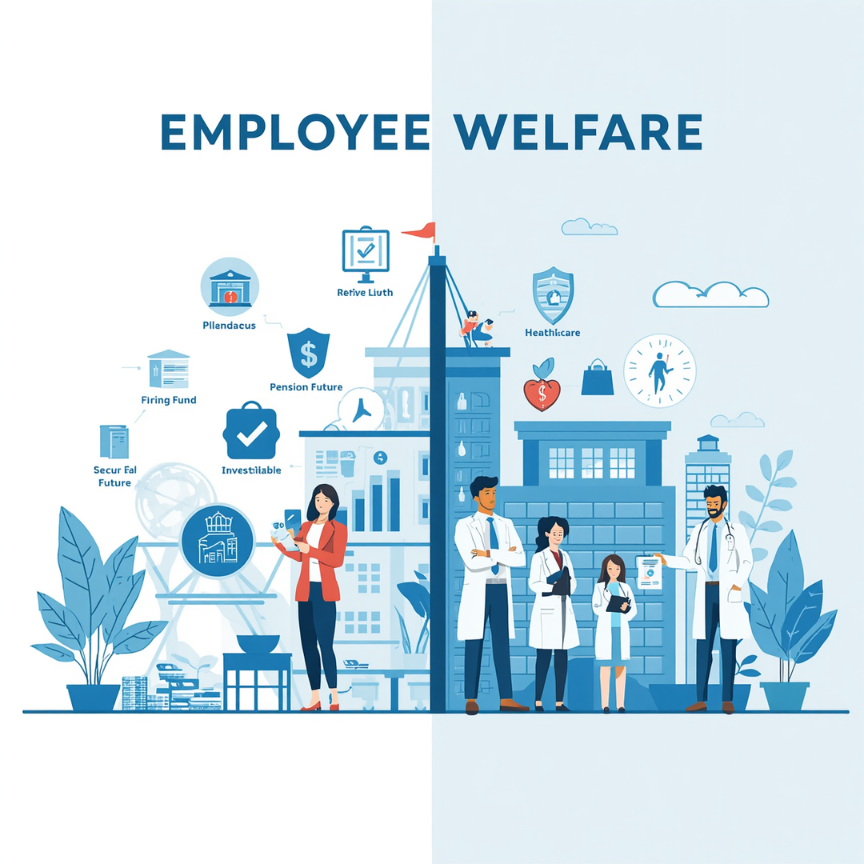
When comparing EPF vs ESIC, it becomes clear that both schemes play an important role in employee welfare. Rather than choosing one over the other, employees benefit most when they receive coverage under both schemes.
Conclusion
Ultimately, it is clear that EPF and ESIC are not competing programs, but rather two sides of the same coin when it comes to your financial well-being. While EPF works silently in the background to build your retirement and ensure your long-term financial security, ESIC acts as an immediate shield to provide healthcare and social protection when health emergencies strike. Employees truly get the ultimate safety net when they are covered by both schemes simultaneously, enjoying a worry-free present and a financially secure future. For business owners, ensuring proper Labour Law Compliance through timely registration and accurate contributions is more than just avoiding legal penalties; it is a powerful way to build a loyal, happy workforce that knows their lives and livelihoods are fully protected.

Want to learn more about employer obligations and the registration process? Read our detailed guide on EPF Registration for Private Limited Companies, where we explain eligibility criteria, required documents, contribution rules, and compliance requirements for businesses in India.